The Role of French Drains in Basement Waterproofing
Water rarely announces itself politely. In basements, it seeps, stains, swells, and lingers. One season, a homeowner notices a faint damp line along the base of a wall. A few months later, cardboard boxes smell musty, paint blisters, and the dehumidifier seems to run without rest. By the time standing water appears, the problem has usually been developing for quite a while.
That is where the French drain earns its reputation. In practical basement waterproofing work, few systems are as widely discussed, misunderstood, and relied upon. A French drain is not a magic fix, and it does not solve every water problem on its own. What it does, when designed and installed correctly, is manage water before hydrostatic pressure pushes that water through cracks, floor joints, and porous concrete.
Homeowners often think of waterproofing as a single product, usually a coating or sealant. The reality is more structural than cosmetic. Water around a foundation behaves according to grade, soil type, drainage paths, rainfall intensity, and the condition of the footing and walls. A French drain fits into that larger picture. It is less about stopping rain from existing and more about giving water an easier route to follow than into the basement.
What a French drain actually does
The basic principle is simple. Water follows the path of least resistance. When soil around a foundation becomes saturated, water builds pressure against basement walls and beneath the slab. Concrete, despite its strength, is not fully waterproof. It can absorb moisture, transmit vapor, and allow leaks through joints and cracks. If water has nowhere to go, it will eventually find its own route indoors.
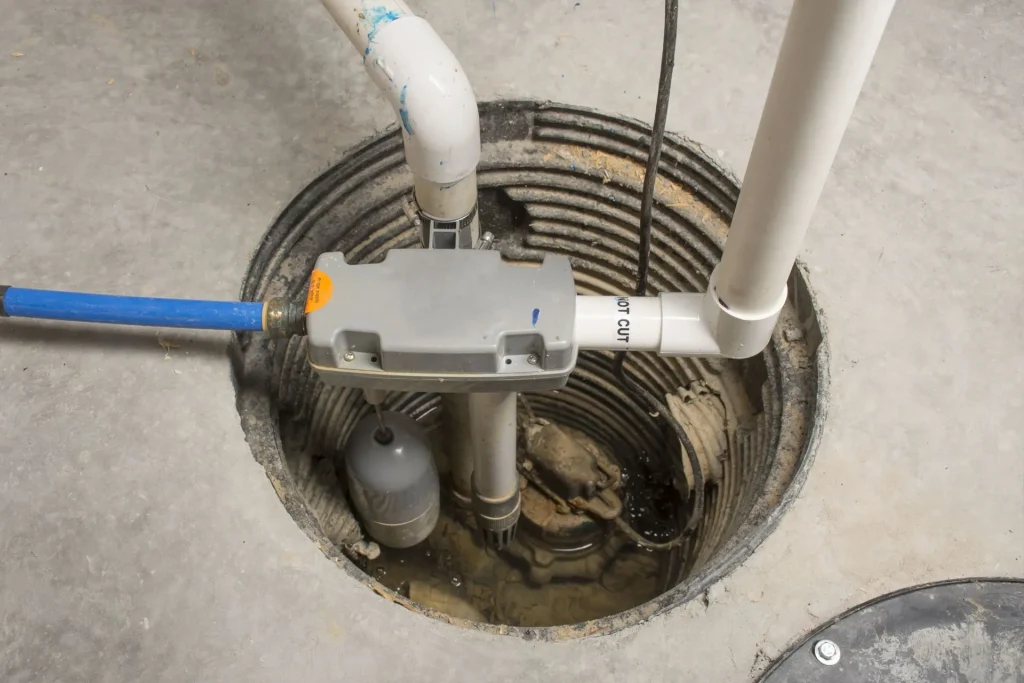
A French drain creates a controlled path for that water. In most basement applications, it consists of a trench containing perforated pipe surrounded by washed stone or gravel. The system collects groundwater and channels it away, either to a sump pit where a pump discharges it, or in some cases to daylight if the site allows. The result is a drop in hydrostatic pressure around or beneath the basement.
That pressure reduction matters. Many wet basements are not leaking because the wall itself has somehow failed dramatically. They leak because the wall-floor joint, the cove seam, or hairline cracks are being asked to resist more water pressure than they reasonably can. Relieving that pressure often does more than surface sealants ever will.
I have seen basements where owners spent years repainting walls with waterproof coatings, only to watch the same peeling recur every spring. After drainage was corrected, the chronic dampness stopped. The wall had not changed. The water management had.
Why basements get wet in the first place
French drains make more sense when the source of the problem is clear. Water intrusion is rarely random. It usually comes from a short list of conditions that combine over time.
Poor exterior grading is one of the most common culprits. If the soil slopes toward the house, even slightly, runoff gathers near the foundation instead of moving away from it. Add clogged gutters or downspouts that discharge too close to the wall, and a large volume of roof water ends up exactly where it should not.
Soil type matters too. Clay-heavy soils hold water and expand when wet. That means they stay saturated longer and exert more pressure against the foundation. Sandy soils drain faster, but they can still direct water toward footings depending on site conditions.
Then there is groundwater. In some areas, especially after prolonged rain or snowmelt, the water table rises enough to affect the basement from below. Homeowners sometimes insist the walls look dry, yet water appears across the floor. In many of those cases, pressure is building under the slab, and the water enters at joints, cracks, or weak spots in the concrete.
Foundation age also plays a role. Older homes may have no effective perimeter drainage, or the original footing drains may be clogged with silt, crushed, or simply degraded. Even relatively new homes can develop drainage issues if backfill settled poorly or if landscaping changed the way water moves across the lot.
Interior and exterior French drains are not the same thing
One source of confusion in basement waterproofing is that people use the term French drain for more than one system. The concept is similar, but the installation and purpose can differ significantly.
An exterior French drain is installed outside the foundation, usually at or near footing level. It intercepts water before it reaches the wall and directs it away. Done properly, this approach is highly effective because it addresses the problem at the source. It also gives contractors access to apply exterior waterproof membranes, protect foundation walls, and correct backfill conditions.
The trade-off is cost and disruption. Exterior excavation is labor-intensive. It can affect landscaping, walkways, patios, decks, and sometimes driveways. On tight urban lots or homes built close to neighboring structures, access may be limited or impossible. If large trees are nearby, root systems complicate the work further.
An interior French drain is installed from inside the basement, usually by breaking out a narrow strip of concrete along the perimeter. A trench is created beside the footing, perforated pipe is laid in stone, and the system directs collected water to a sump pit. The concrete is then replaced. Interior systems do not stop water from reaching the outside of the wall, but they do capture it before it reaches the basement floor.
That distinction matters. An interior system is a water management system, not a barrier system. It accepts that water may enter the drainage zone and focuses on removing it efficiently. In many real-world basements, especially finished basements where leaks are showing up at the cove joint, this is a practical and effective answer.
When a French drain is the right solution
Not every damp basement needs a French drain, and not every French drain solves the whole problem. Good waterproofing work starts with diagnosis, not habit.
A basement with occasional condensation on cool pipes and walls may have a humidity problem rather than groundwater intrusion. In that case, insulation, air sealing, and dehumidification may matter more than drainage. By contrast, a basement that leaks during heavy rain, shows efflorescence along the wall base, or develops recurring puddles at one corner is often signaling a drainage issue.
A French drain is usually worth considering when one or more of these conditions are present:
- water enters at the wall-floor joint or through floor cracks
- hydrostatic pressure is causing repeated seepage after rain
- the existing footing drain has failed or is absent
- exterior excavation is impractical, but water still needs controlled removal
- a sump pump system can be added to safely discharge collected water
The strongest candidates are often homes where the leak pattern is consistent. Water showing up in the same areas, particularly near the perimeter, usually points to a drainage path that can https://dominickqljl841.scriblorax.com/posts/common-causes-of-basement-leaks-and-how-waterproofing-helps be intercepted. Random moisture in the middle of a slab can be more complicated and may require a broader look at under-slab conditions, plumbing, or vapor drive.
How the system works in practice
A well-built French drain is not just a trench with a pipe tossed in. Performance depends on details, and in waterproofing, details separate a durable system from a short-lived one.
The trench needs to be deep enough and positioned correctly relative to the footing. The pipe should be perforated and pitched to move water consistently toward discharge. Clean, washed stone around the pipe creates void space for water to collect and flow. In many designs, a filter fabric is used to reduce soil migration into the stone bed, although practices vary depending on whether the system is interior or exterior and what soils are present.
In an interior system, contractors often install a drainage channel that allows water from the wall cavity or cove joint to enter the trench. Some systems include a vapor barrier or wall flange to direct moisture downward. That does not make the wall dry in the same sense an exterior membrane would, but it does keep seepage from reaching interior finishes.
The sump pit is the heart of many interior installations. If the French drain gathers the water, the sump pump is what gets rid of it. That means pump selection matters. A basement that takes in only occasional seepage has different needs than one in a high water table area where the pump may cycle heavily during storms. Battery backup systems are often worth serious consideration, especially in regions where severe weather and power outages arrive together. It is a bitter irony when the basement floods because the pump lost power during the same storm that created the need for it.
One detail that gets overlooked is discharge location. Pumped water must be moved far enough from the house that it does not simply loop back toward the foundation. Short discharge lines that empty beside the wall defeat the purpose. In freezing climates, the line also needs protection from ice blockage.
The relationship between French drains and wall coatings
Homeowners often ask whether they can skip the drain and just seal the wall. The answer depends on what the wall is dealing with. If bulk water pressure is present, coatings alone rarely hold up. They may reduce dampness or improve appearance for a while, but they do not remove the force of water pressing inward.
There is a place for sealants and membranes. On the exterior side of a foundation, a proper waterproof membrane can be an excellent part of the system. On interior surfaces, masonry sealers may help reduce vapor transmission in mild cases. But expecting a painted-on coating to resist persistent hydrostatic pressure is usually optimistic.
This is one of the most important ideas in basement waterproofing: pressure management tends to outperform surface treatment. If you remove the water or lower the pressure, many leakage symptoms fade. If you leave the pressure in place and cover the symptom, the water often wins eventually.
Exterior drainage still matters, even with a French drain
One mistake I see regularly is treating an interior French drain as permission to ignore the outside of the house. That is shortsighted. Even the best perimeter drain performs better when less water reaches it.
A homeowner can dramatically improve results by correcting grading, extending downspouts, keeping gutters clear, and preventing roof runoff from dumping at the foundation. These are not glamorous improvements, but they reduce the water load before it ever reaches the drainage system.
In one case, a basement kept overwhelming a sump system despite a correctly installed interior drain. The pump was doing its job, but one downspout terminated less than two feet from the foundation in dense clay soil. During storms, hundreds of gallons from the roof were being concentrated in a single area. Extending that discharge well away from the house reduced pump cycling immediately. The waterproofing system had not failed. The site drainage had been working against it.
Installation quality makes or breaks performance
French drains have a strong reputation, but some of that reputation suffers because mediocre installations are common. A poorly installed drain may still look convincing from the surface. The problems often reveal themselves only later.
Improper pitch can allow water to sit in the pipe instead of moving. Stone that contains too much fine material can clog. Inadequate discharge planning can send water back to the foundation zone. Sump pits that are too small or pumps that are undersized may struggle during peak inflow. On exterior jobs, careless backfilling can damage membranes or create settlement that changes surface grading for the worse.
That is why evaluation matters more than sales language. The right contractor should be able to explain where the water is coming from, why the proposed drain location makes sense, how discharge will be handled, and what supporting measures are recommended outside. If the answer to every wet basement is the exact same system with no discussion of site conditions, that is a warning sign.
Costs, disruption, and what homeowners should expect
French drains vary widely in cost because basements vary widely in complexity. An interior perimeter system with a sump pump is usually less expensive than full exterior excavation, but square footage, access, slab thickness, finish removal, and disposal all affect the final number. Exterior systems can become significantly more expensive if porches, hardscaping, or deep excavation are involved.
Disruption is real. Interior installation typically means noise, dust, concrete breaking, and temporary loss of use in the basement. Finished basements may need sections of drywall, trim, flooring, or built-ins removed and later restored. Exterior work can turn landscaping into a jobsite for days or longer.
Even so, many homeowners find the trade worthwhile because recurring water damage is rarely cheap. Replacing carpet, drywall, storage contents, and damaged finishes every few years quietly becomes its own expensive cycle. Add mold remediation or structural wood rot, and the math changes quickly.
What French drains do not solve
A professional view of French drains has to include their limits. They are highly effective in the right role, but they are not universal.
They do not fix structural foundation movement. If a wall is bowing, rotating, or cracking due to settlement or lateral soil pressure beyond normal moisture issues, structural repair may be needed in addition to drainage.
They do not correct indoor humidity caused by poor ventilation, exposed earth in crawlspace transitions, or moisture-producing mechanical systems.
They do not address plumbing leaks, sewer backups, or window well failures unless those are separately corrected.
And they do not eliminate maintenance. A sump pump should be tested. Discharge lines should be checked. Gutters and grading should still be watched seasonally. Waterproofing is not a set-it-and-forget-it category. It is more accurate to think of it as managed risk.
Signs the system may need attention later
Once a French drain is installed, it usually works quietly in the background. That said, homeowners should pay attention to changes. Subtle clues often appear before there is a visible water problem.
A few useful things to watch are:
- sump pumps cycling far more often than usual
- damp spots appearing beyond the original problem areas
- musty odors returning after being absent for a long period
- discharge water backing up or draining slowly
- visible efflorescence or staining reappearing along the perimeter
None of those signs automatically means the drain has failed. Weather patterns change, landscaping shifts, and pumps wear out. But they are worth investigating early, before a small service issue becomes a flooded basement.
Why the best waterproofing plans are layered
The most reliable basement waterproofing strategy is usually not a single product or a single trench. It is a layered approach that recognizes how water behaves around buildings.
That might mean a French drain inside the basement, paired with a quality sump pump, better grading, extended downspouts, and selective crack repair. On another house, it may mean exterior excavation on the most vulnerable wall, plus drainage mat, membrane, and replacement of an old footing drain. On yet another property, the right answer may be simpler than expected, because the main issue is roof runoff and not groundwater at all.
This layered view is especially important for finished basements. Once insulation, framing, flooring, and furnishings are added, the cost of failure rises. It is much easier to defend a basement before it is built out than after moisture has been trapped behind walls.
The real value of a French drain
The reason French drains remain central to basement waterproofing is that they align with the physics of the problem. Basements leak because water accumulates where it should not and pressure builds where structures are vulnerable. A French drain gives that water a better option.
That may not sound glamorous, but in construction, practical usually beats glamorous. A basement stays drier not because someone applied an impressive label to a wall, but because water was intercepted, collected, and directed away with consistency. When the system is chosen for the right conditions and installed with care, it can change a basement from a recurring liability into a usable, dependable part of the home.
For homeowners weighing their options, that is the key takeaway. French drains are not a cure-all, and they are not always the first fix to try. But when groundwater pressure is the real enemy, few tools are more important or more effective.
ARD Waterproofing
98 Smull Ave, West Caldwell, NJ 07006, United States
+1 917-691-8411
FAQ About Basement Waterproofing
Can you 100% Waterproof a Basement in West Caldwell?
A properly designed system can substantially reduce basement water intrusion, but no method can promise protection against every flood, equipment failure, or future change in site conditions. The first step is identifying whether moisture comes from surface runoff, groundwater, plumbing, or condensation. Solutions may include grading and gutter improvements, drainage, foundation repairs, and a sump system. Review the specific coverage and exclusions of any written warranty.
How much does it cost to professionally waterproof a basement in NJ?
There is no single price that fits every basement. Cost depends on the cause of the leak, the area needing work, access, excavation requirements, drainage design, sump equipment, and restoration of disturbed finishes or landscaping. Request an on-site assessment and an itemized written estimate that explains the scope, exclusions, and maintenance requirements before comparing proposals.
How long does foundation waterproofing last in West Caldwell, NJ?
Service life varies with the waterproofing materials, installation quality, soil and water conditions, and maintenance. Drainage components and pumps may require servicing or replacement even when other parts of the system remain functional. Keep gutters, drainage outlets, and sump equipment maintained, and have recurring leaks or changes in foundation condition assessed. Ask for product-specific expectations and written warranty terms rather than relying on one lifespan for the entire system.